Safety in the motorhome
Safety is a priority across all our motorhomes, so you can travel with peace of mind to any destination.
Real mistakes we've seen during trips
After [X years] renting motorhomes, we've found that most problems aren't related to mechanical breakdowns or vehicle faults. They usually happen due to small oversights that can easily be avoided.
One of the most common mistakes is related to the motorhome's height. Many drivers pay attention to the sides and the rear, but forget to check what's above the vehicle.
For example, we've had a case where a branch hit a roof skylight and damaged it. The driver was correctly using the rear camera, but the camera shows what happens behind the vehicle, not above it.
On another occasion, a thick branch hit the top area above the side door. The driver simply didn't see it in time and kept driving until they hit it.
We also recommend being careful when entering certain supermarket or shopping centre car parks. Some entrances have height restrictions that can cause serious damage to the roof.
Another mistake that can be very costly is forgetting to close a window or skylight before setting off. At motorway speeds, the force of the wind can seriously damage them or even tear them off.
That's why we always recommend spending a couple of minutes before setting off to check windows, skylights, the awning and any exterior elements of the motorhome.
Important rules for a safe trip
Travelling by motorhome means freedom and comfort.
For your motorhome rental to be safe and stress-free, it's important to follow some basic rules.
Where to park and stay overnight safely
Where we recommend parking a motorhome
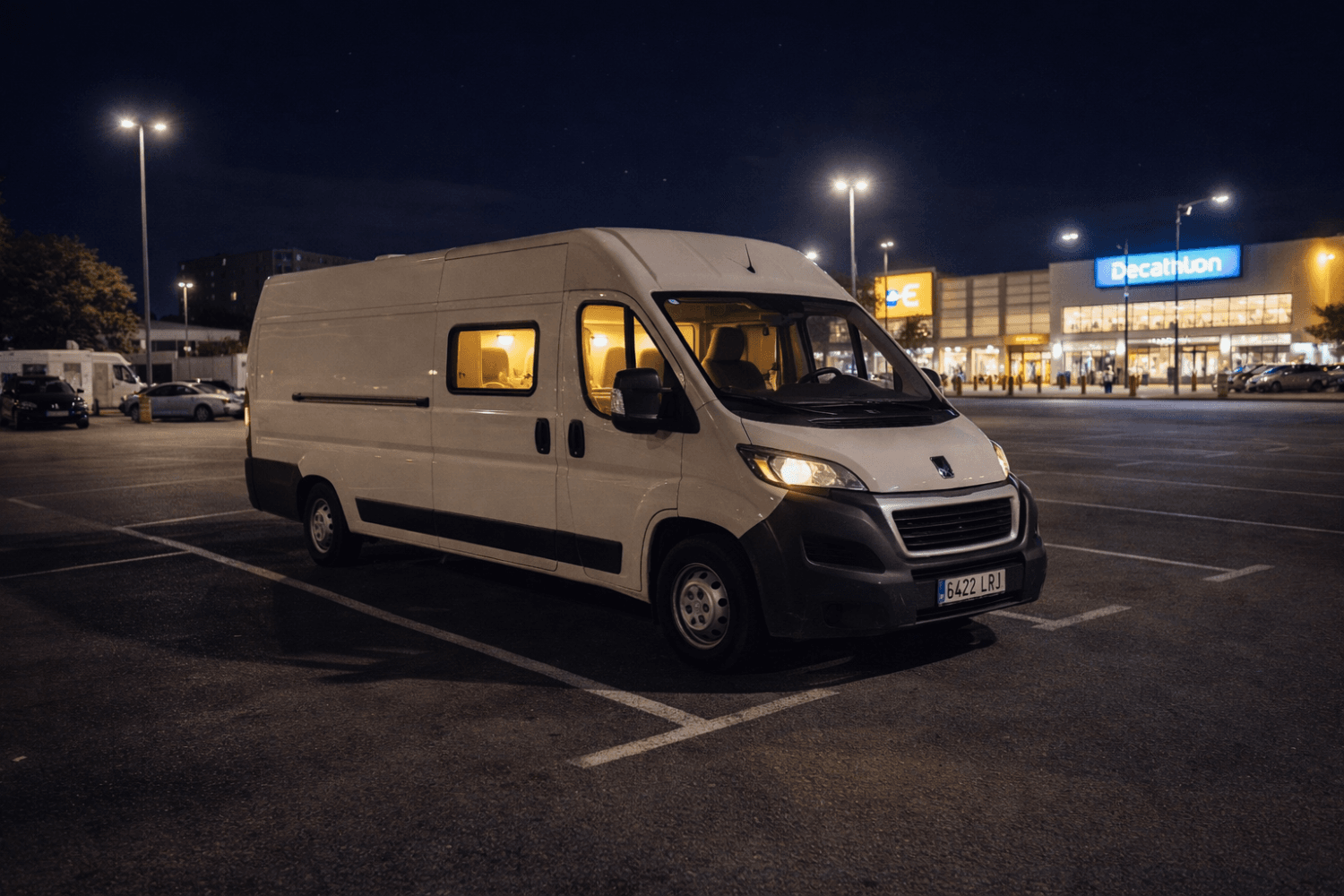
One of the recommendations we repeat most before every trip is to avoid driving the motorhome into city centres.
We're not just talking about Madrid, Valencia, Alicante or Barcelona. This advice applies to virtually any city in Spain. Streets are often narrower than they seem, many areas have restrictions for large vehicles, and finding parking can turn into an unnecessary waste of time.
It's usually much more convenient to leave the motorhome on the outskirts and get to the centre using Uber, public transport or even electric scooters. Many travellers take advantage of this option to move around more freely and avoid parking problems.
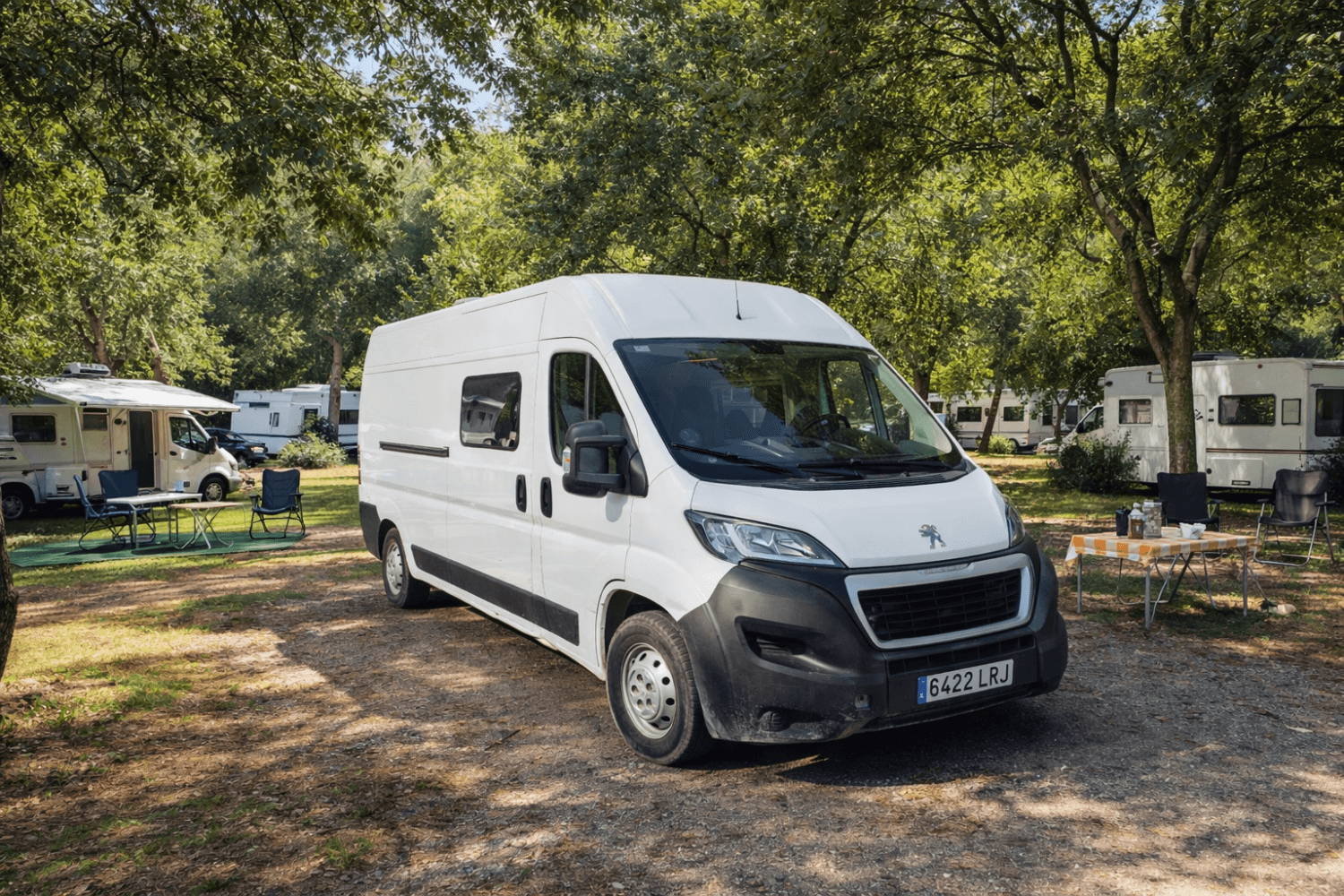
To spend the night, we recommend using motorhome service areas, campsites or spots where other motorhomes are already parked. Apps like Park4Night let you check real reviews from other travellers and see whether a spot is quiet and safe.
We generally recommend avoiding completely isolated spots or places with no one around. In most cases, it's safer and more comfortable to park where other motorhomes or travellers are already there.
We also recommend being respectful of neighbours and other travellers. If you spend the night near a beach, a residential area or private homes, avoid loud music, unnecessary noise and leaving rubbish behind. Being a good neighbour helps ensure motorhomes remain welcome and that these spots stay available for future travellers.
And remember that as long as you don't set up awnings, tables, chairs or other camping equipment, in many [places you can remain] legally parked just like any other vehicle.
Safety during the night
Online it's easy to find videos and posts that make sleeping in a motorhome seem dangerous. However, our experience has been very different.
After years of renting motorhomes, we've never had a theft, a break-in attempt or any similar incident related to our customers' safety.
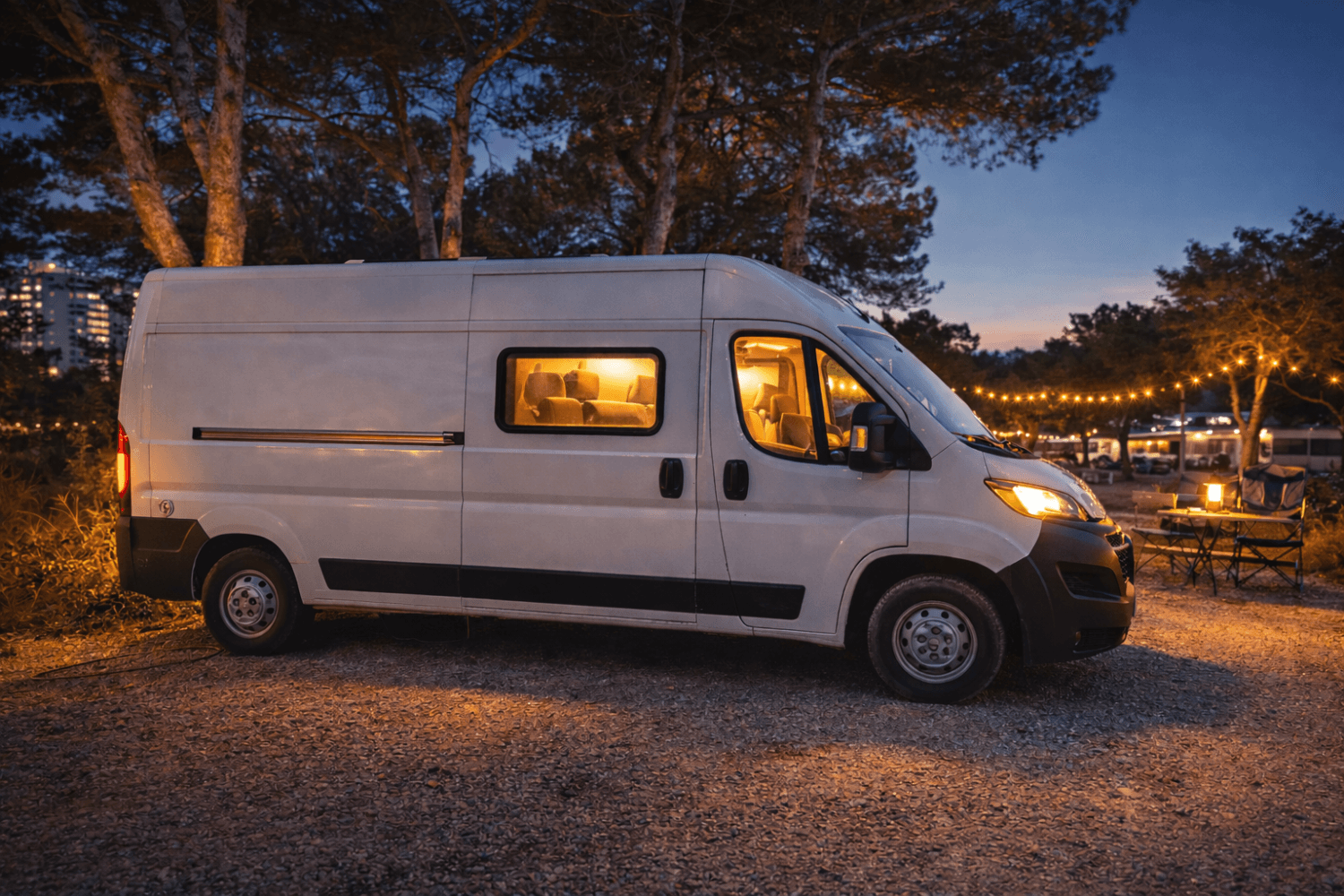
Even so, all our motorhomes have additional security systems so you can rest with peace of mind.
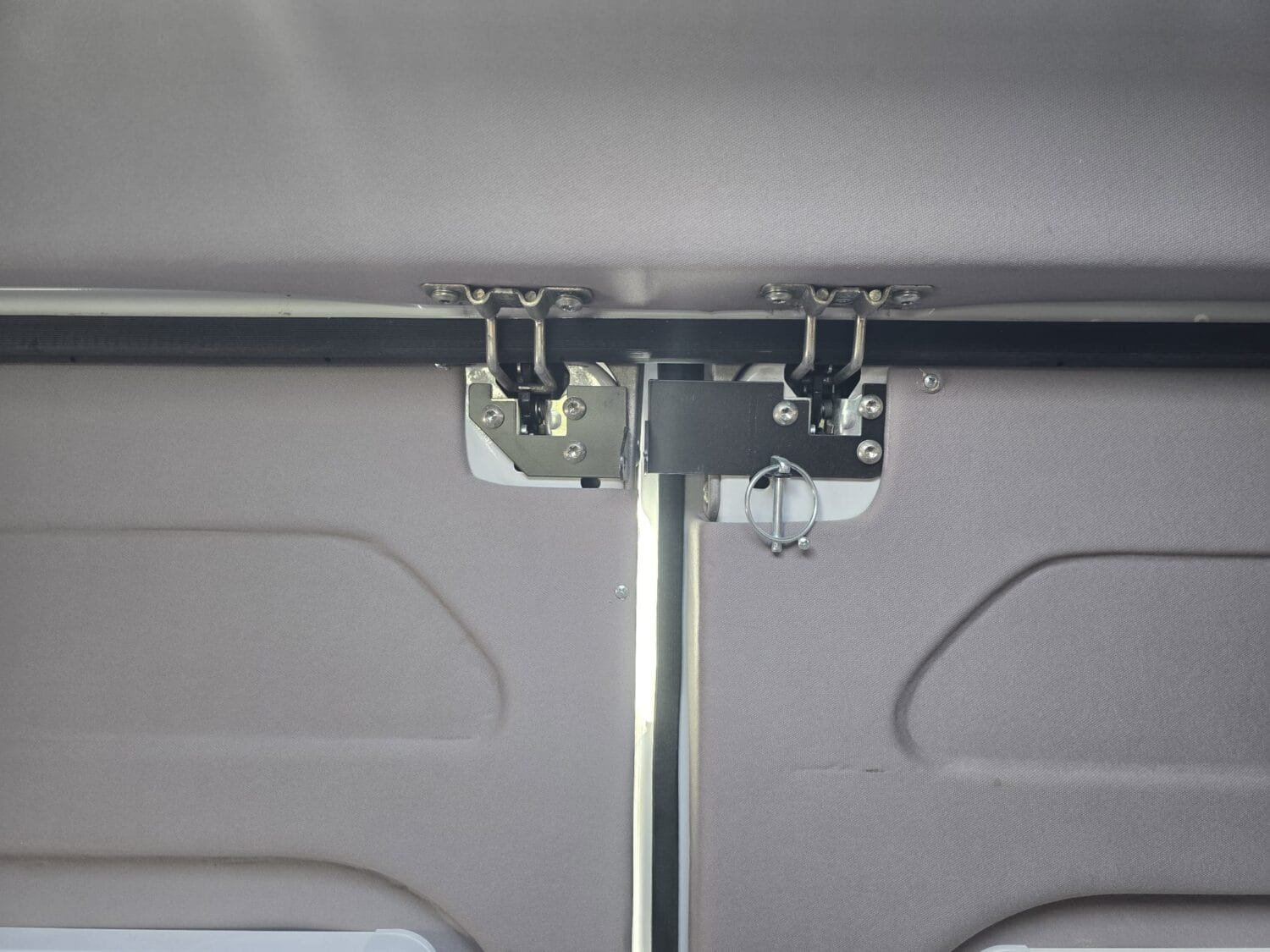
The front doors can be locked from the inside using a system that uses the seatbelt anchor points. Once fitted, it becomes extremely difficult to open the doors from the outside.
The rear doors have additional security locks fitted on the inside, adding extra protection overnight.
The side door is equipped with central locking and cannot be opened from the outside without the corresponding key.
When all these systems are engaged, the motorhome becomes a very safe space to rest in.
In addition, the Carado I449 has exterior cameras that let you see what's happening around the vehicle. These cameras can also be pointed towards the inside of the motorhome, which is especially useful for those travelling with pets who want to check everything is fine when they leave them alone for a few minutes.
As always, the best safety measure remains choosing suitable spots to stay overnight. Motorhome areas, campsites and spots frequented by other travellers tend to be the most comfortable and safest options.
You won't be alone during the trip
Around 90% of our customers rent a motorhome for the first time. After years working with first-time travellers, we know exactly what the most common doubts and worries are before starting the trip.
That's precisely why we've created guides, articles and explanatory videos, which we send before you collect the vehicle.
Over time I realised that a video guide is usually much more useful than a one-off in-person explanation. Not because people don't understand the explanations. It's simply that, when it's time to collect the motorhome, people's minds are usually busy with lots of things at once. Some travellers have just arrived after a long journey, others are thinking about the route for the next few days, checking documents or trying to take in a lot of new information in a short time.
That's why it's completely normal for some details to be forgotten. It happens to practically everyone.
I especially remember a 78-year-old customer. Although he's Spanish, he's lived in Sweden for decades and usually comes back to Spain every spring and autumn to enjoy the weather and travel around the country for several weeks.
For many years he travelled in his own Volkswagen Transporter. Over time, however, keeping that vehicle stopped making sense for him. The inspections, maintenance and all the trips involved in looking after the vehicle ended up becoming an unnecessary hassle.
When he first rented a motorhome with us, I personally explained how all the systems worked. Everything seemed clear, but by the next day he had already forgotten some of the details.
That experience confirmed something I already suspected: video guides usually work better than a single explanation at handover. Videos can be watched before the trip, paused, repeated and checked again whenever a question comes up.
The funniest part is that this customer ended up becoming one of our regular travellers. Today he knows exactly how the motorhome works, he's already rented with us on four occasions and keeps coming back every year to travel around Spain.
In fact, many of the best tips and improvements we apply come precisely from the suggestions of regular customers and experienced travellers.
If a 78-year-old could adapt to a motorhome of this size without any trouble and fully enjoy the experience, most travellers quickly discover it's much simpler than they imagined.
Of course, if you still have any questions after watching the videos and reading the instructions, we'll be happy to help you before and during your trip.
What to do in case of a flat tyre?
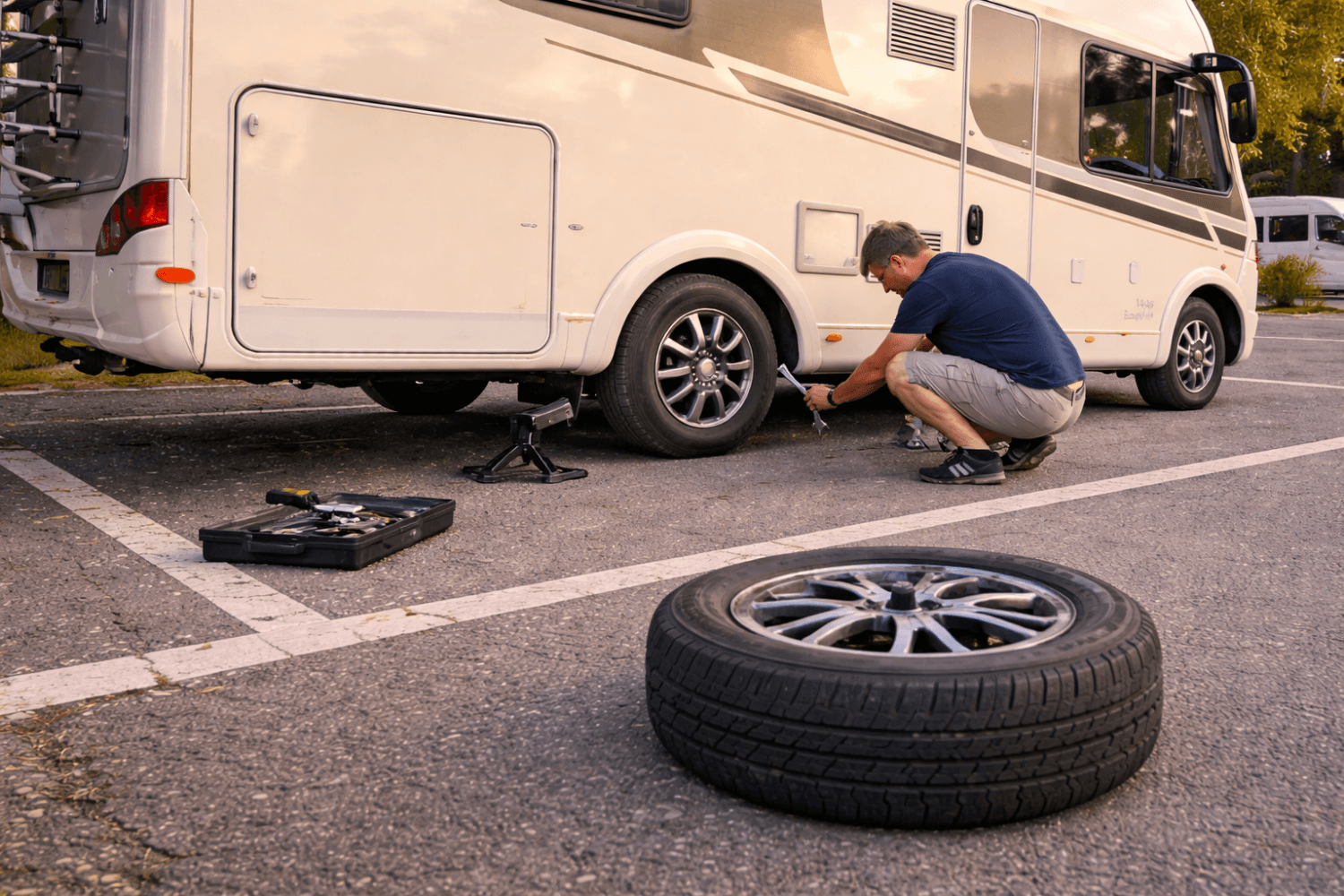
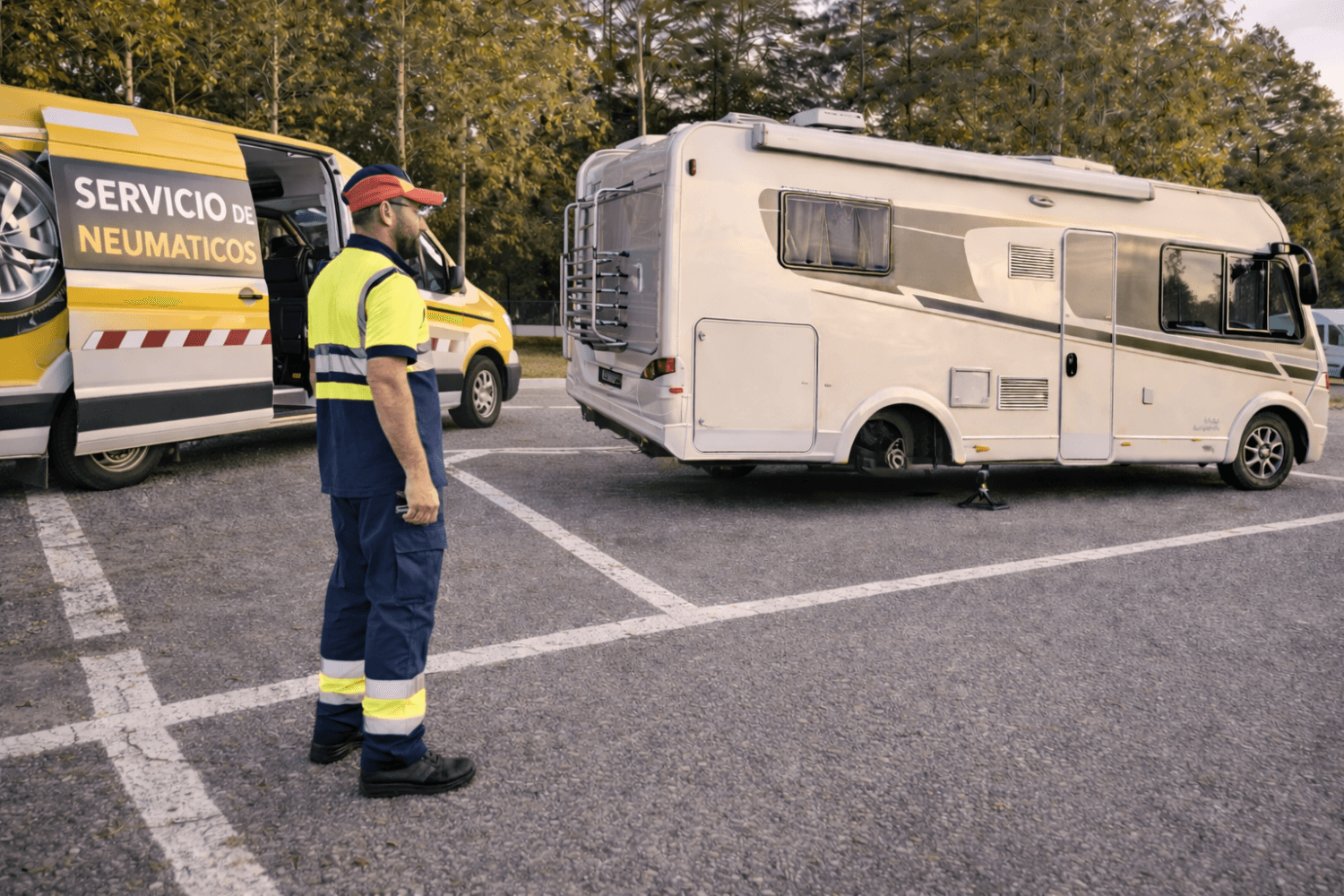
All our motorhomes have a tyre repair kit that can fix most small punctures.
If you know how to use it and feel comfortable doing so, you can carry out the repair following the manufacturer's instructions.
However, for most travellers the simplest option is to contact the insurance company's assistance service directly.
Professionals have the right tools and usually resolve this kind of situation much faster than someone trying to do it for the first time during their holidays.
That's why, unless you have experience and want to do it yourself, we generally recommend calling the assistance service and continuing your trip without unnecessary hassle.
Fire safety
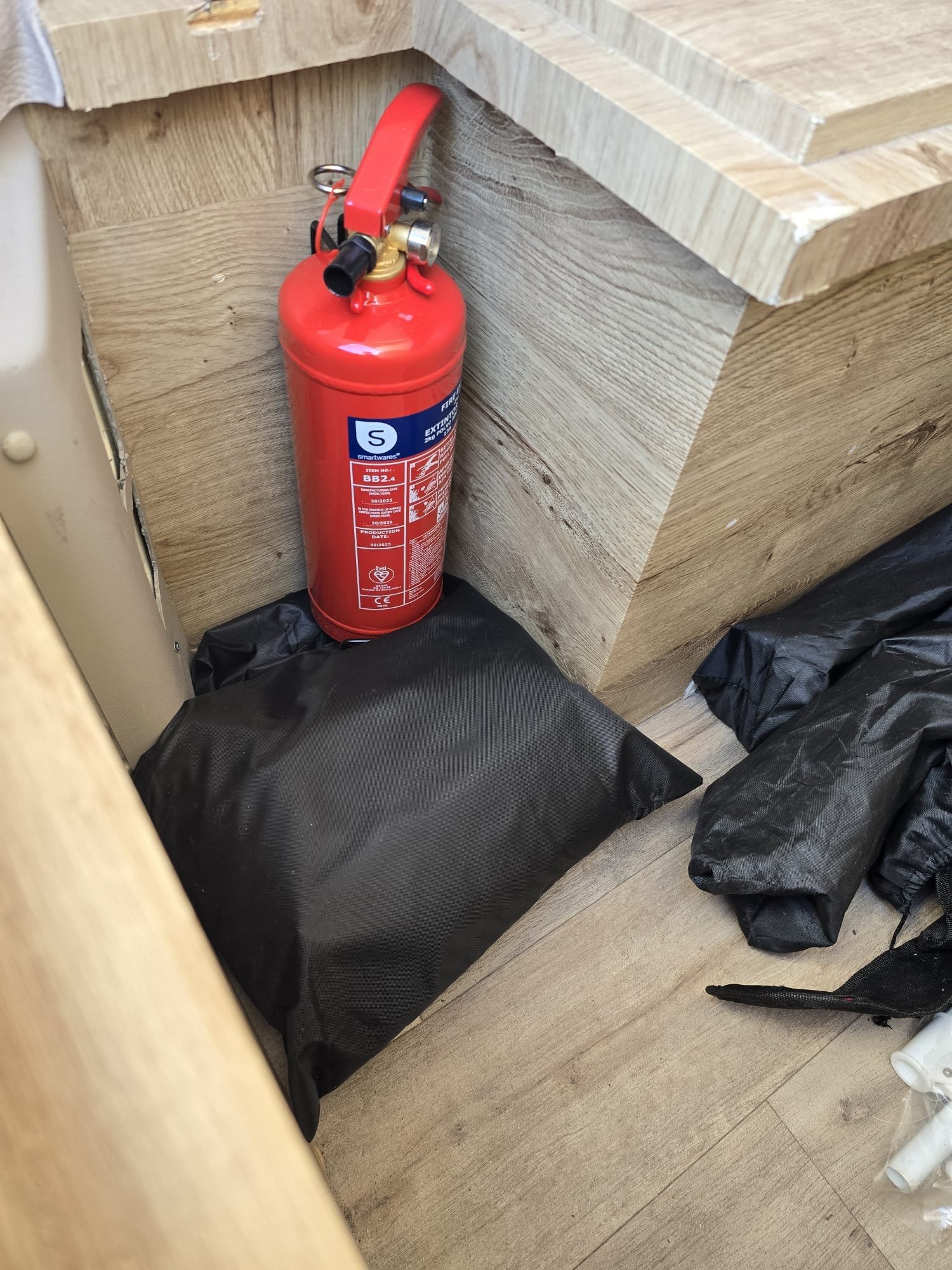
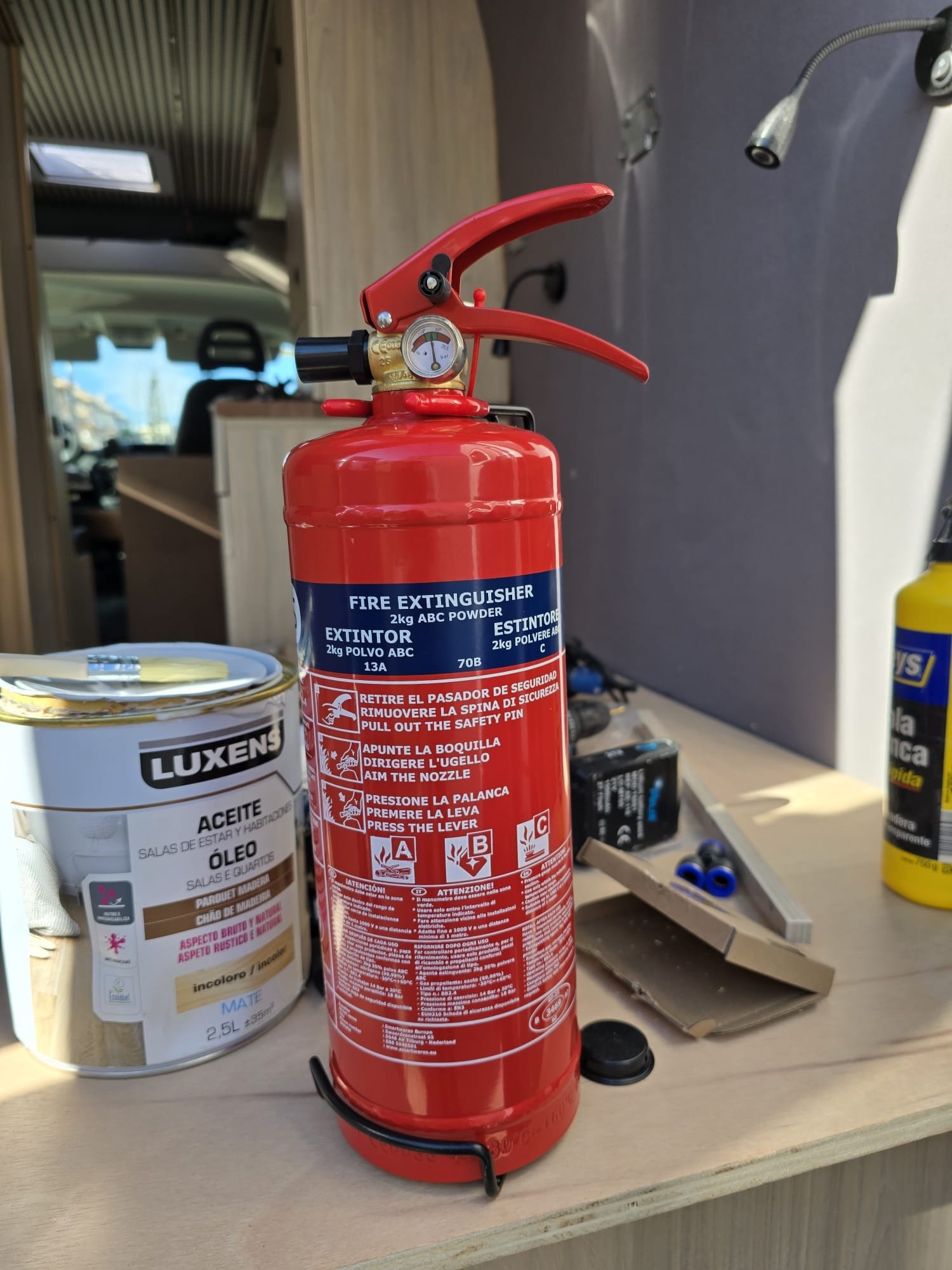
All our motorhomes are equipped with a fire extinguisher.
Before starting your trip, we recommend checking its location or asking us where it is in the model you've rented.
Although this type of incident is extremely rare, having a fire extinguisher on board allows you to act quickly in case of any unexpected situation.
Smoking in the motorhome

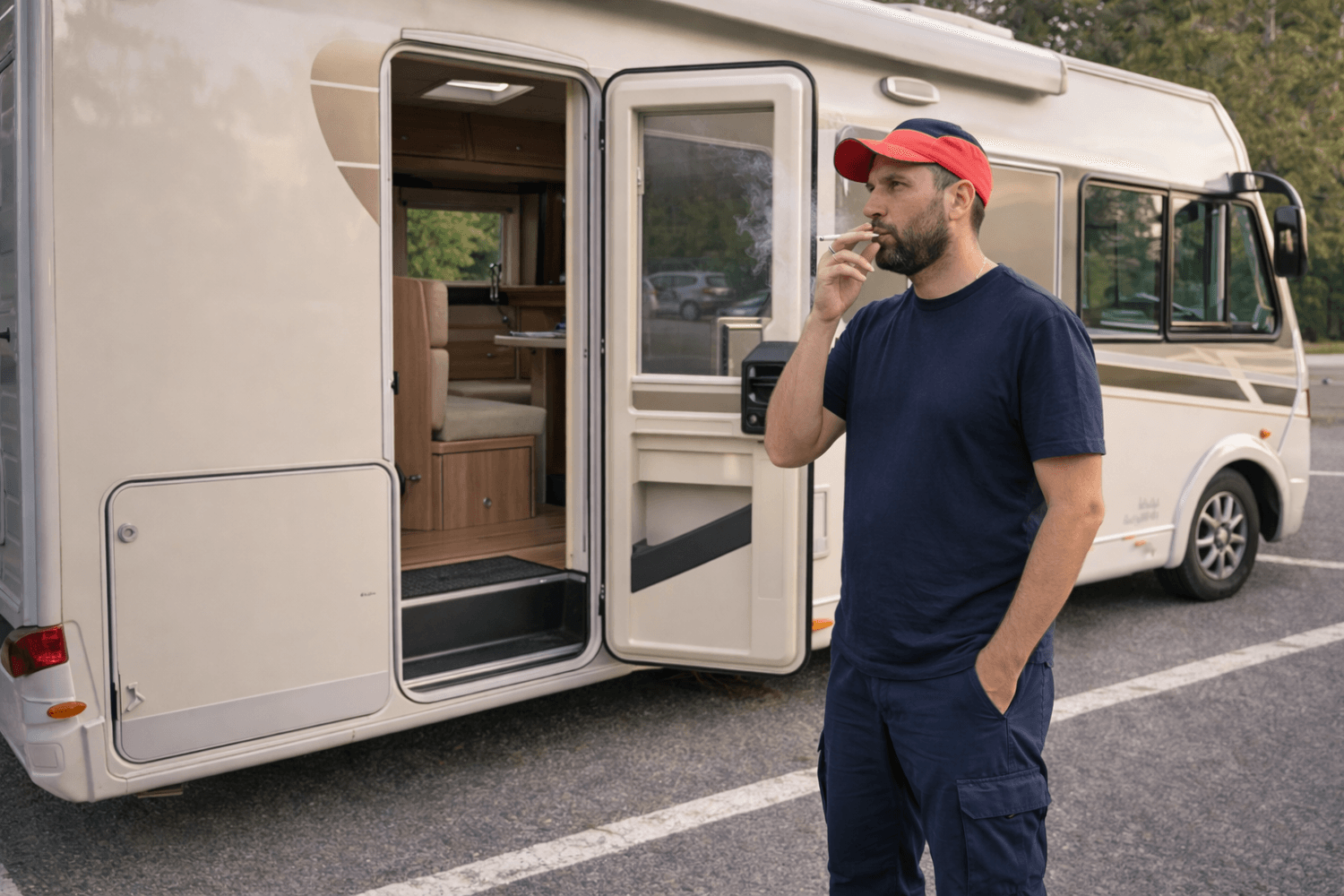
Smoking inside the motorhome is prohibited.
it's not safe;
the smell lingers for a long time;
it can damage the interior.
Smoking is only allowed outside the motorhome.
Electricity in the motorhome
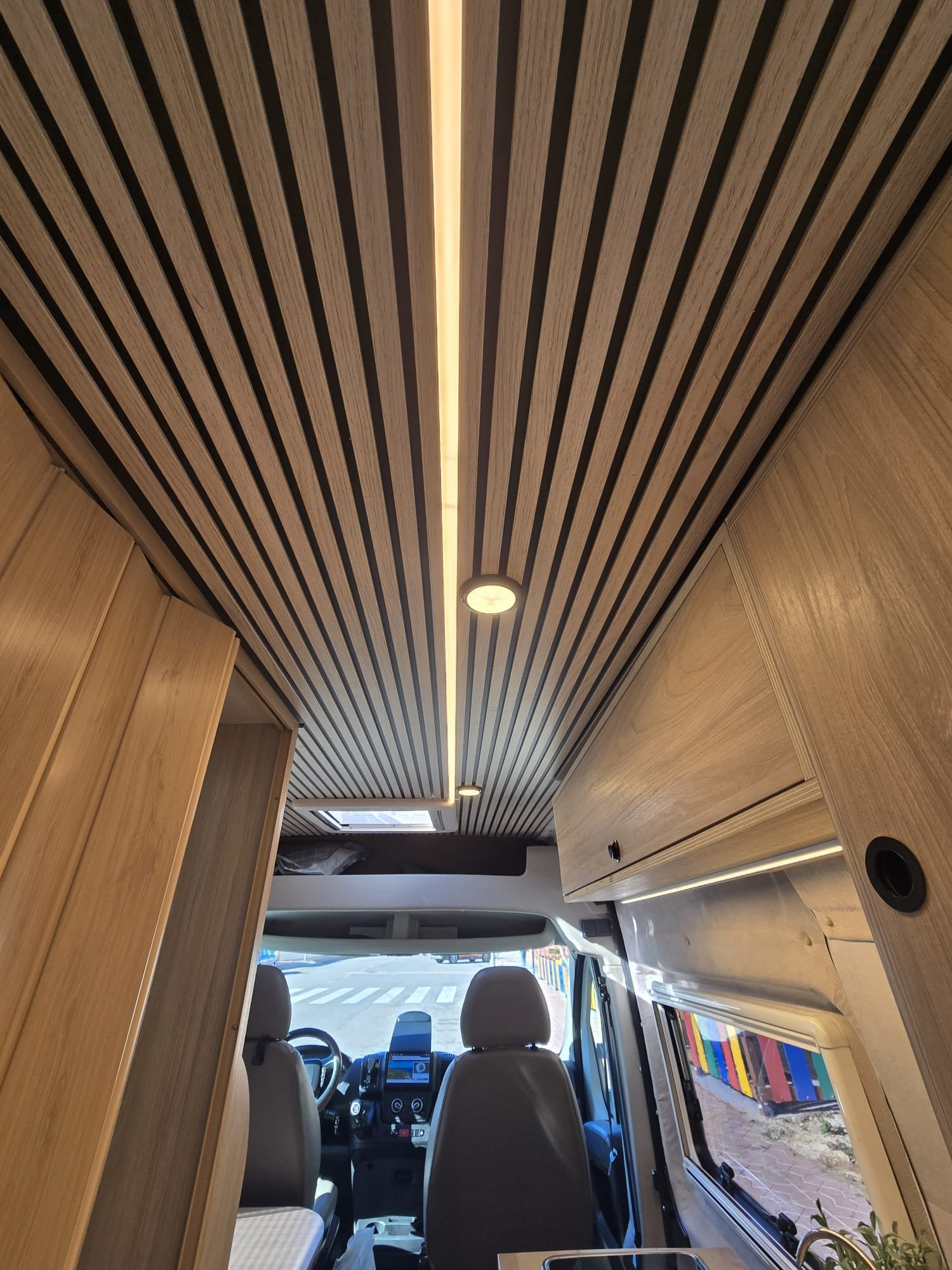
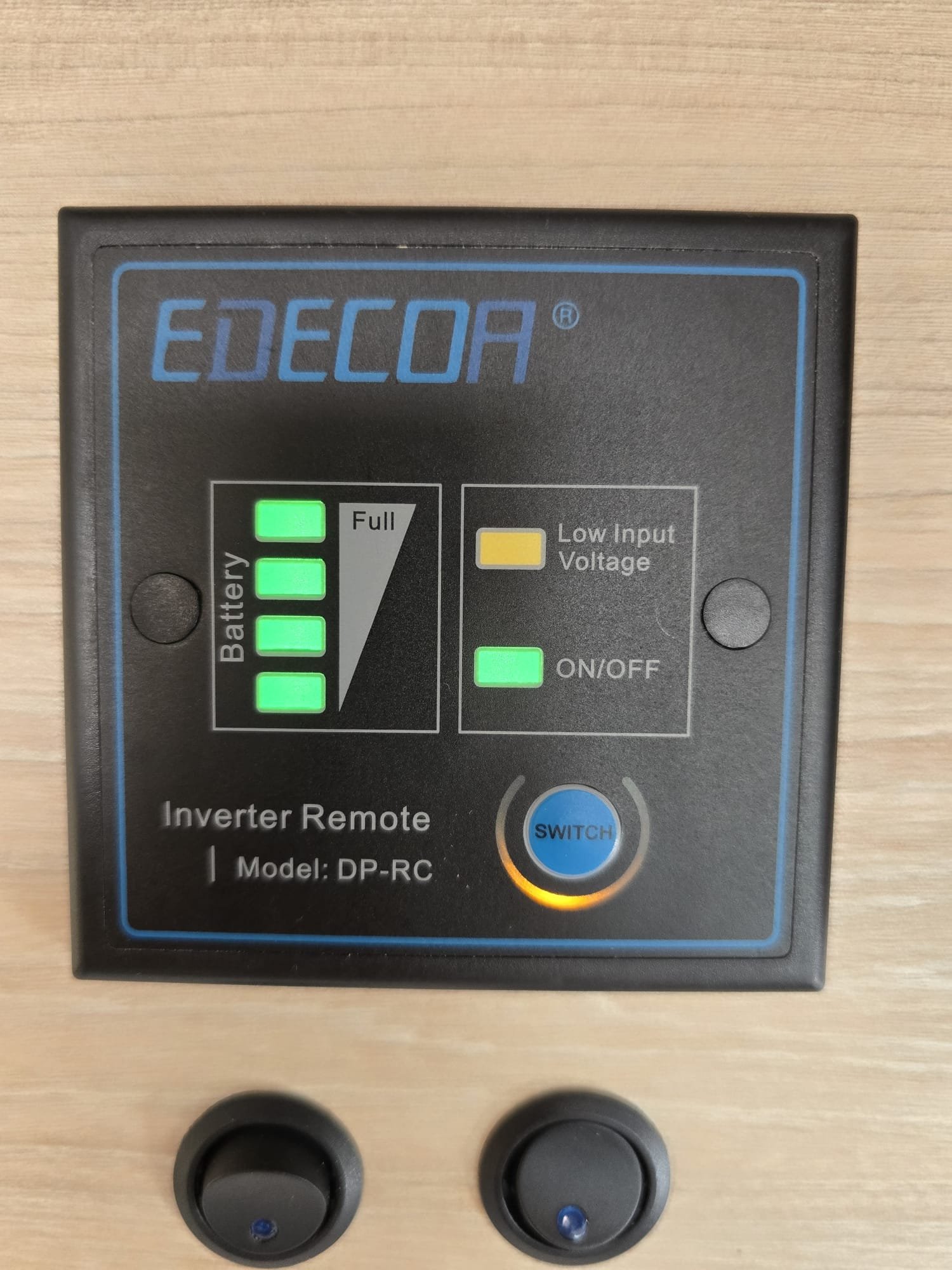
Before travelling, we recommend checking our guide on motorhome self-sufficiency, where we explain how to properly manage the battery, water and electricity use during your trip.
One of the appliances that uses the most energy is the water heater. For normal use, there's no need to leave it on all day. It's best to switch it on around 10 minutes before showering or washing dishes. In around 10 minutes, the water reaches the right temperature.
If the heater stays on for hours or throughout the night, it will keep the water hot and use energy unnecessarily, especially in colder seasons.
It's also important to remember that solar panels need direct sunlight to charge the batteries. If the motorhome stays parked for several days under trees or in permanently shaded areas, charging will be slower and self-sufficiency will decrease.
If you'd like more tips on optimising electricity use, check out our guide on motorhome self-sufficiency.
Gas and ventilation
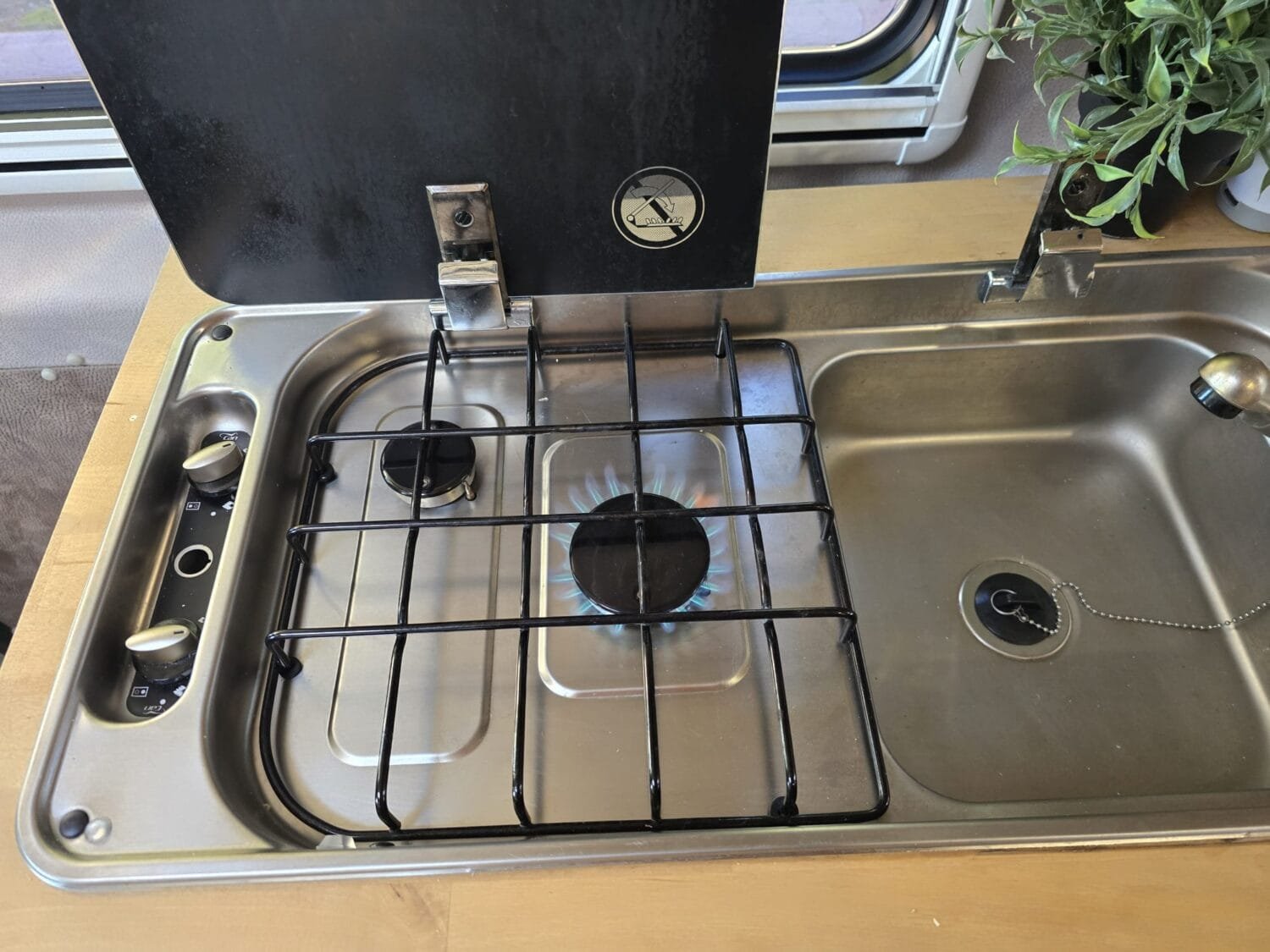
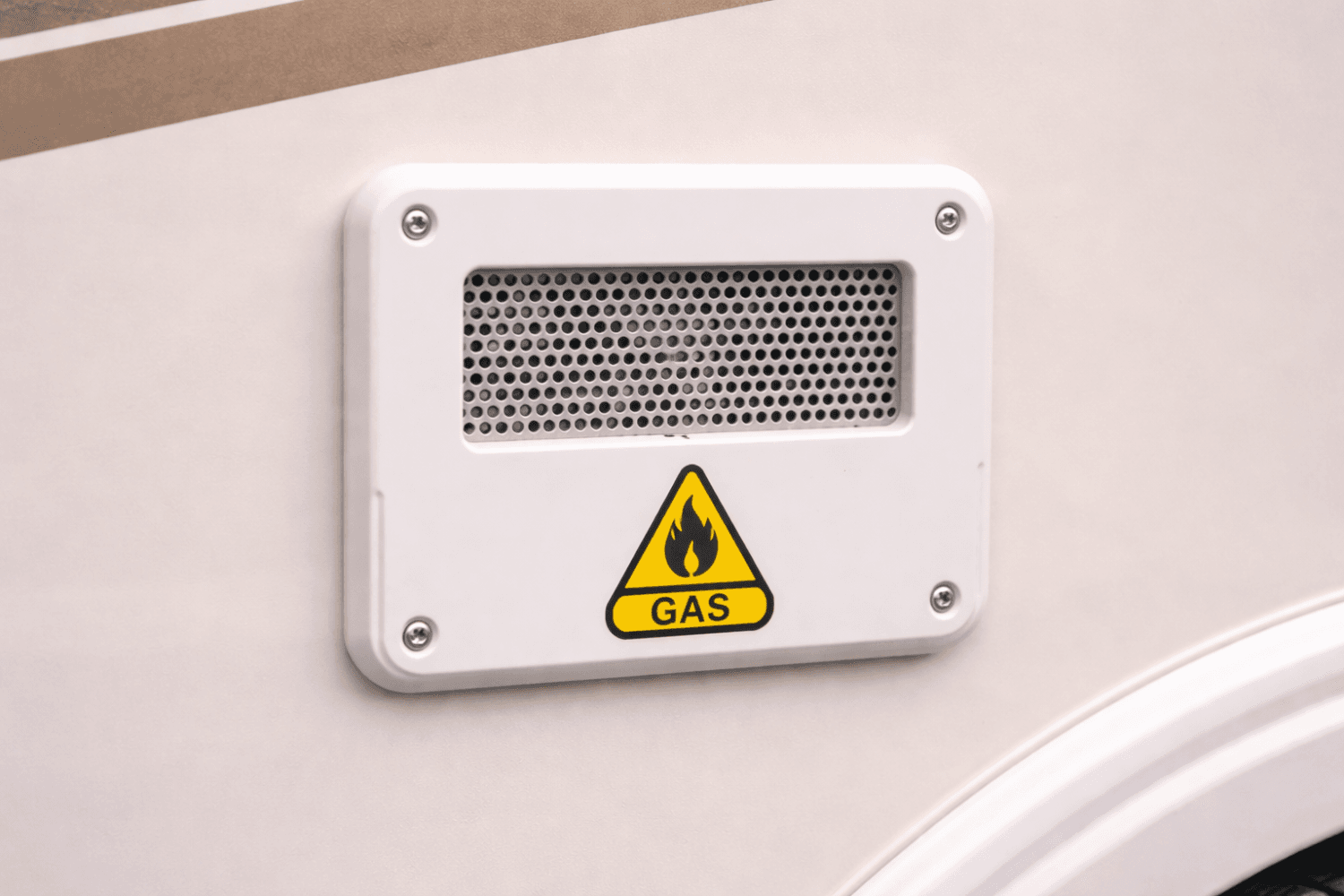
Using gas often raises many doubts among those travelling by motorhome for the first time. In practice, however, it's one of the systems that tends to cause the fewest problems during the trip.
Depending on the model, gas can be used for the hob, fridge, heating or water heater. Before every rental we check the condition of the gas bottles so you can start your trip with complete peace of mind.
Gas consumption is relatively low. A large bottle can last many months of normal use, and small ones usually last several months too. For this reason, it's very rare to run out of gas during a trip.
In any case, if a bottle does run out, it can easily be replaced at many petrol stations and authorised sales points.
Some models also come with spare gas cartridges for the portable stove, providing extra reassurance during your trip.
Another common question is what happens if there's a gas leak. The compartments where the gas bottles are stored have mandatory low-level ventilation as required by Spanish regulations. Since gas is heavier than air, in the event of a leak it tends to escape outwards through these vents.
If you ever notice a smell of gas, simply close the supply valve, open the doors and windows to air the vehicle, and get in touch with us.
Fortunately, in all our years of experience renting motorhomes, we've never had any incidents related to gas leaks.
Guide to hiring a motorhome
If you'd like more details on self-sufficiency, trip planning or renting a motorhome for the first time, we recommend checking out our related guides.
FAQ
Do I need experience to travel by motorhome?
No. Most of our customers rent a motorhome for the first time.
Before your trip you'll receive guides, instructions and explanatory videos to help you get familiar with the vehicle and its systems. If anything isn't clear, we'll be happy to help.
What happens if I have a question during the trip?
We're available throughout your trip to help with any questions about the motorhome.
If you need assistance, you can contact us by phone or WhatsApp and we'll help you resolve any issue or query.
How does the excess and the deposit work?
The excess and the deposit are different things.
The excess is the maximum amount the customer would have to cover in the event of damage covered by the insurance. The rest is covered by the insurance company according to the terms of the policy.
The deposit is a guarantee that is refunded at the end of the rental if the motorhome is returned in the same condition it was received in.
Will I have enough water and electricity during the trip?
Yes. All our motorhomes are set up to offer good autonomy during your trips.
We also have a dedicated guide on autonomy, where we explain how to manage your water and electricity use so you can travel with peace of mind.